
Category: Industry Insights / Product Science Target Audience: Distributors, Beauty Salon Owners, Retailers
Introduction
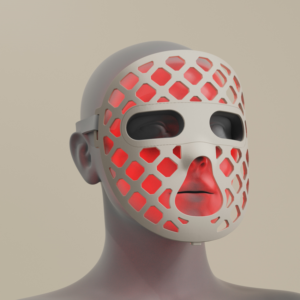
If there is one question that dominates the beauty tech industry today, it is this: “Do LED face masks actually work?”
With over 700 monthly searches for this exact phrase in the US alone, consumer curiosity is at an all-time high. For beauty retailers and clinic owners, the answer is crucial. It determines whether this product is a fleeting trend or a staple investment for your inventory.
The short answer is: Yes, they do—but the technology matters.
In this article, we break down the science of Photobiomodulation (PBM) to help you understand why this non-invasive treatment has become a global best-seller and what technical specifications you must verify when sourcing devices.
How Does LED Light Therapy Affect Skin Cells?
LED (Light Emitting Diode) therapy is not magic; it is biology. It works on a principle called Photobiomodulation. Just as plants use sunlight to create energy (photosynthesis), human cells absorb specific wavelengths of light to stimulate cellular regeneration5.
The efficacy depends entirely on the wavelength precision. Here is the breakdown of the most effective spectrums:
| Light Color | Wavelength (nm) | Key Benefit | Target Mechanism |
| Red Light | 630nm – 633nm | Anti-Aging & Collagen | Stimulates mitochondria to produce ATP (cellular energy) |
| Near-Infrared | 830nm | Deep Healing & Repair | Improves circulation and tissue regeneration deep in the dermis |
| Blue Light | 415nm | Acne Reduction | Creates an oxygen-rich environment that eliminates C. acnes bacteria |
| Yellow Light | 590nm – 620nm | Redness & Lymphatic Flow | Triggers lymphatic drainage to flush toxins and reduces ROS (inflammation) |
The Red Light Mechanism: Red light penetrates the epidermis to reach fibroblast cells. This interaction triggers the mitochondria to produce more ATP. This boost in cellular energy accelerates collagen and elastin production, directly reducing fine lines and inflammation.
The Near-Infrared Mechanism: Invisible to the naked eye, Near-Infrared (NIR) light has the longest wavelength and penetrates deepest into the dermis and subcutaneous tissue. It boosts local blood circulation and reduces inflammation by inhibiting the production of inflammatory cytokines. This makes it a powerful tool for accelerating wound healing and post-procedure recovery.
The Blue Light Mechanism: Blue light works through a photodynamic reaction. The C. acnes bacteria naturally produce porphyrins. When blue light hits these porphyrins, it induces the release of singlet oxygen—a molecule that is toxic to the bacteria but harmless to human skin cells. This process effectively sterilizes the pore from within, stopping breakouts at the source.
The Yellow Light Mechanism: Yellow light specifically targets the skin’s lymphatic system. It improves lymphatic drainage, helping to flush out toxins and reduce fluid retention (puffiness). Additionally, it regulates the production of Reactive Oxygen Species (ROS), which helps to calm erythema (redness) and soothe sensitive or rosacea-prone skin.
What is the Difference Between Clinical and At-Home Devices?
As a business, you must clearly communicate the distinction between professional panels and retail masks to manage customer satisfaction.
-
- In-Clinic Devices: These utilize high-intensity panels with high irradiance. Results are immediate but require expensive, repeated appointments.
-
- At-Home LED Masks: These operate at a lower power density designed for cumulative efficacy. Consistency is the key driver here. Regular use (3-5 times a week) yields significant long-term improvements in skin texture and tone comparable to clinical maintenance.
Why Should You Add LED Masks to Your Beauty Catalog?
From a B2B perspective, the business case for LED masks goes beyond skincare results.
1. High Safety & Low Liability Unlike chemical peels or lasers, LED therapy is non-invasive, painless, and carries zero downtime. This significantly minimizes liability risks and customer returns due to adverse reactions.
2. Increasing Basket Value (ROI) For retailers, LED masks are the perfect high-ticket “add-on.” They pair logically with consumable serums (check compatibility), effectively increasing your Average Order Value (AOV).
3. Manufacturing Insight: The Supply Chain Surge Industry Note: At Xometry, we have observed a 40% increase in prototype requests for personal care devices this quarter. This supply chain signal indicates that the “at-home spa” trend is transitioning from a niche luxury to a mass-market staple. Stocking these devices now positions you ahead of the peak adoption curve.
How Do You Identify High-Quality LED Manufacturers?
Not all masks are created equal. Low-quality LEDs can flicker or drift in wavelength, rendering them ineffective. When sourcing, prioritize these technical factors:
-
- Irradiance Stability: Does the device deliver consistent energy (mW/cm²) across the entire treatment surface?
-
- Wavelength Precision: Is the red light certified at exactly 633nm? A deviation of just 15nm can significantly reduce biological absorption.
-
- Manufacturing Tolerance: Look for suppliers who use medical-grade silicone and precise circuit printing to prevent “hot spots” that can damage the skin.
-
- Certification: Ensure products carry FDA 510(k) clearance or CE marking to guarantee ocular safety.
Conclusion
Do LED face masks work? The clinical data says yes. The market demand confirms it.
As consumers become more educated about skincare science, the demand for high-quality, scientifically backed LED devices will only grow. Success in this category relies on sourcing devices that honor the science rather than just the aesthetic.
Looking for premium, compliant, and effective LED Light Therapy prototypes or manufacturing solutions? [Contact Us Today] to request our latest catalog and clinical specifications.